 Sipu Jha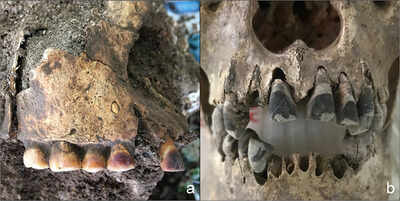
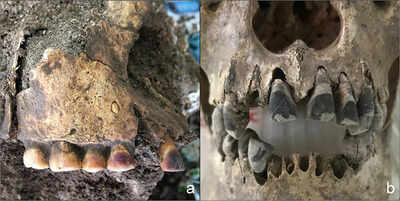
Archaeologists working in northern Vietnam have found chemical evidence that people were permanently blackening their teeth around 2,000 years ago. The study focused on human remains from the Dong Xa site, dated to the Iron Age and linked to the wider Dong Son cultural sphere. By analysing the surface of ancient enamel, researchers identified traces of iron compounds consistent with deliberate cosmetic treatment rather than natural staining. The results offer the first clear scientific confirmation that tooth blackening was already established in Vietnam two millennia ago. The findings also suggest that the technique relied on iron salts, likely mixed with plant materials rich in tannins, to create a deep, glossy black surface that altered the appearance of the teeth.
Study confirms tooth blackening was practiced in Vietnam 2,000 years ago
The research team used microscopic and chemical methods to examine enamel from several skulls. Most of the mineral content matched normal tooth composition, including calcium and phosphorus. What stood out was the repeated presence of iron and sulphur in the outer enamel layers.Iron oxide was detected at levels unlikely to be caused by soil contamination. The pattern was consistent across samples, strengthening the case for intentional treatment. One fragmentary specimen showed weaker signals, but this was thought to be due to preservation issues rather than a different practice.Taken together, the data indicate that iron-based mixtures were applied to teeth in a controlled way. The likely addition of tannin-rich plant substances would have helped fix the colour and produce the distinctive black sheen recorded in later historical accounts.
Historical records link practice to early Vietnamese societies
Written sources from Chinese dynastic histories mention communities in what is now Vietnam whose people blackened their teeth. References date back to the Eastern Han period. Later texts describe the custom as a clear marker of regional identity.Archaeological finds from later centuries also include burials with blackened teeth. The new chemical evidence from Dong Xa bridges the gap between texts and material remains, suggesting continuity of the practice from the Iron Age onwards.The timing coincides with broader changes in northern Vietnam. Around 2,500 to 2,000 years ago, ironworking became widespread. Exchange networks with southern China expanded, and social structures grew more complex. Tooth blackening may have developed within this shifting landscape of identity and contact.
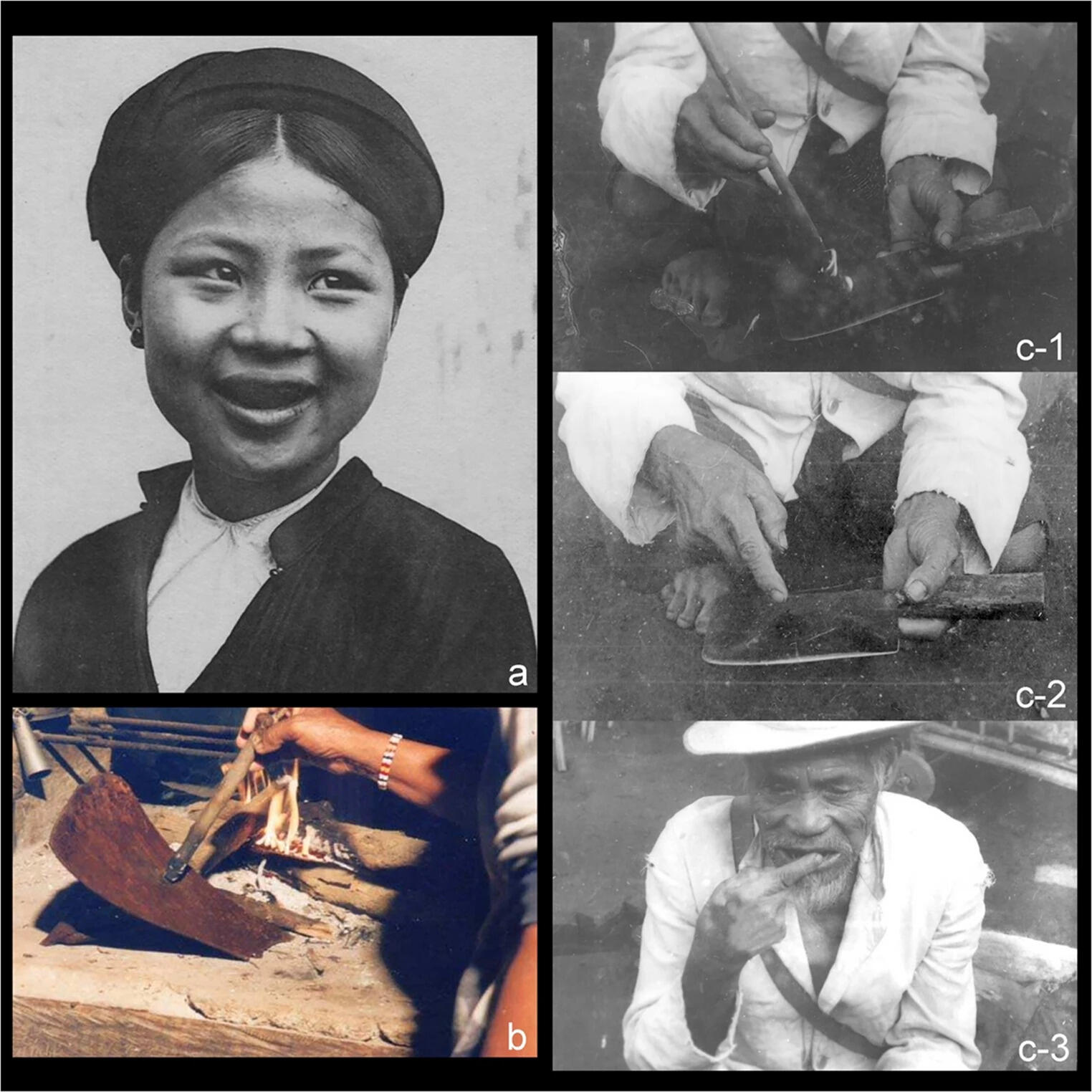
Study confirms tooth blackening was practiced in Vietnam 2,000 years ago (Image Source – Springer Nature)
Tooth blackening expressed identity and cultural boundaries
Ethnographic accounts from the nineteenth and early twentieth centuries describe tooth blackening as common across many Vietnamese communities. It was associated with maturity, beauty and belonging. In some traditions, blackened teeth distinguished humans from spirits or outsiders.The Vietnamese method appears to have been particularly elaborate, involving preparation of the teeth and application of layered pastes. This differs from incidental staining caused by chewing betel or other plants.The Dong Xa findings show that this aesthetic choice has deep roots. What might appear unusual by modern standards was, for centuries, an embedded expression of identity. The enamel still carries the trace.






 हिन्दी
  English