 Sipu Jha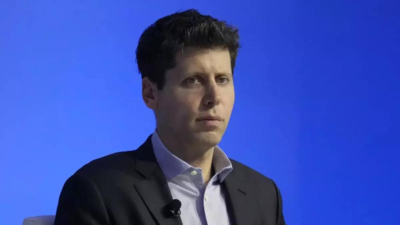
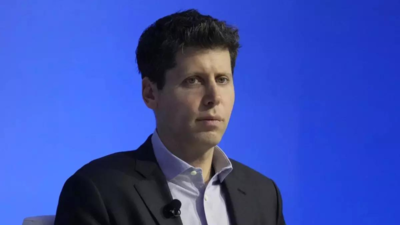
Sam Altman believes people without technical backgrounds can still play a role in OpenAI’s efforts to develop artificial general intelligence (AGI). The CEO of the company behind ChatGPT has regularly discussed AGI in interviews and podcasts, describing it as a long-term objective and outlining his expectations for its timeline. However, several voices across the technology industry, including Microsoft AI chief Mustafa Suleyman, Google DeepMind CEO Demis Hassabis and Nvidia CEO Jensen Huang, have argued that achieving AGI remains a significant challenge and may not happen anytime soon.In a recent post on the microblogging site X (formerly Twitter), Altman noted that non-technical candidates can play a role in research recruiting, which he described as critical to building AI research teams. Altman wrote, “We believe the best research teams are built through context, taste and a real feel for where the field is headed next; research recruiting is about finding people who will move the frontier forward, not just filling roles.”He added that Tifa Chen, OpenAI’s head of research recruiting, is “looking for exceptional recruiters from non-traditional backgrounds, former founders especially.”Altman’s remarks come amid ongoing debate within the technology industry over the timeline and feasibility of AGI, with several leaders offering differing views on when, or even whether, such systems can be achieved.
Read Sam Altman’s message to non-technical candidates who can contribute OpenAI in achieving AGI
In his X post, Altman wrote: “We often get asked how people who are not technical can contribute to AGI. One area is research recruiting.Tifa (@tifafafafa) is looking for exceptional recruiters from non-traditional backgrounds, former founders especially.We believe the best research teams are built through context, taste and a real feel for where the field is headed next; research recruiting is about finding people who will move the frontier forward, not just filling roles. Should be an interesting thing!”
What tech leaders have said about achieving AGI
Last year, Microsoft AI CEO Mustafa Suleyman, who previously co-founded Google DeepMind, criticised the idea of AGI as a competitive prize. He has argued that there is no race to win and that achieving AGI is not about earning a medal. Speaking days after introducing Microsoft’s MAI Superintelligence Team, Suleyman said progress in AI should remain aligned with human oversight. “We can’t build superintelligence just for superintelligence’s sake. It’s got to be for humanity’s sake, for a future we actually want to live in. It’s not going to be a better world if we lose control of it,” Suleyman said.Meanwhile, Google DeepMind CEO Demis Hassabis has also shared his perspective on AGI timelines earlier. In November 2025, he said that while progress in models such as Gemini 3.0 has been steady, achieving AGI could still be 5 to 10 years away and may require 1 or 2 additional breakthroughs. He has previously suggested there is a 50% chance of reaching AGI by 2030. Hassabis noted that further advances in reasoning, memory, and world models would likely be necessary before systems like Google Gemini could meet expectations associated with general intelligence.On the other hand, Nvidia CEO Jensen Huang has taken a definition-based approach to the debate. He said that if AGI is defined as AI capable of passing structured professional exams, such as legal or medical tests, at a level that exceeds most people’s, it could emerge within five years. “If we specified AGI to be something very specific, a set of tests where a software program can do very well — or maybe 8% better than most people — I believe we will get there within 5 years,” Huang noted earlier in March 2024.AGI, often described as human-level AI, refers to systems capable of performing a wide range of tasks at a level comparable to that of humans. However, differing definitions of what qualifies as AGI continue to shape predictions about when it might arrive. Huang has emphasised the importance of setting clear benchmarks, noting that without a precise definition, it is difficult to forecast a timeline.






 हिन्दी
  English