 Sipu Jha
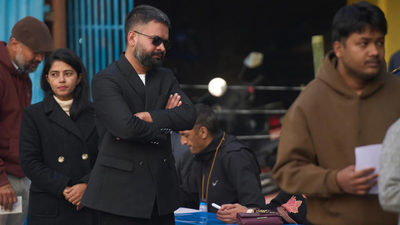
Counting began across Nepal on Friday in a high-stakes parliamentary election that could reshape the country’s political landscape just months after a dramatic youth-led uprising toppled the government. Millions of voters cast their ballots on Thursday in what many see as a defining moment for the Himalayan republic.The election comes six months after nationwide protests led largely by Generation Z demonstrators forced then prime minister KP Sharma Oli to resign. The demonstrations, initially sparked by anger over a temporary social media ban and allegations of corruption, quickly escalated into violent clashes with security forces. At least 77 people were killed and government buildings across the country were set ablaze during the unrest.
Also read: Engineer, rapper, mayor, disruptor — Nepal’s next PM at 35?Since the protests, Nepal has been governed by an interim administration led by former chief justice Sushila Karki, which called early elections to restore a full democratic mandate. Now, voters across the country — from remote Himalayan villages to the crowded streets of Kathmandu — are choosing a new parliament that will decide who forms the next government.
Key contenders battling for power
The election has effectively become a contest between the political establishment and a new generation of reform-minded leaders.Two long-standing parties remain major contenders: the Nepali Congress and the Communist Party of Nepal (Unified Marxist–Leninist). Both have dominated Nepali politics for decades but have faced growing criticism over corruption and ineffective governance.Former prime minister KP Sharma Oli is seeking a political comeback and remains a powerful figure within the UML party. His stronghold in the Jhapa district has become one of the most closely watched battlegrounds of the election.However, the biggest challenge to the traditional parties comes from Balendra Shah, whose political movement has captured the imagination of younger voters. Shah rose to prominence first as a rapper critical of the political elite before entering politics and winning the Kathmandu mayoral election in 2022.Now leading the Rastriya Swatantra Party, Shah has campaigned on promises to tackle corruption, improve public services and create jobs for young people. At just 35, he could become one of Nepal’s youngest prime ministers if his party secures enough seats.Another major figure in the race is Gagan Thapa, the newly elected leader of the Nepali Congress, who has also presented himself as a reformist voice within the traditional political establishment.
A political system facing public anger
The election is taking place against the backdrop of widespread frustration with Nepal’s political system. For decades, the country’s politics has been dominated by a handful of parties, while governments have struggled with instability and corruption allegations.Nepal has witnessed frequent leadership changes since adopting a democratic system, with more than a dozen governments formed over the past two decades. Coalition governments have been the norm, and no administration has completed a full five-year term in nearly 70 years of electoral politics.The September 2025 uprising exposed the depth of public anger. What began as protests against a social media ban quickly expanded into a broader movement demanding accountability, economic reforms and an end to political patronage networks.Young voters in particular have become increasingly vocal. Nearly half of Nepal’s population is under the age of 24, and many feel that traditional parties have failed to address unemployment, rising inequality and the lack of economic opportunities.“We hope everything will change after this election,” said 28-year-old voter Barsha Shakya in Kathmandu. “Young people want development and a government that actually listens.”
Millions head to polling stations across Nepal
Polling stations began at 7am local time on Thursday, and a turnout of 60% was recorded.Nearly 19 million people are registered to vote in the election, including about 800,000 first-time voters. The electorate is split between roughly 9.66 million men and 9.24 million women, with a small number registered under a third gender category.Authorities declared a three-day public holiday to allow citizens to travel back to their hometowns to vote. Nepal’s mountainous terrain often makes election logistics difficult, and helicopters were used to deliver ballot boxes and voting materials to remote high-altitude regions.Across the country, security was tightened to prevent unrest. Around 335,000 security personnel, including police and soldiers, have been deployed at polling centres and vote-counting stations. Despite a few minor disputes between party representatives in some districts, the voting process has largely proceeded peacefully.Early turnout estimates suggest participation may hover around 60%, potentially the lowest in more than two decades.
What happens next
Nepal’s parliament consists of 275 members elected through a mixed electoral system. Voters directly elect 165 representatives to the House of Representatives, while the remaining 110 seats are allocated through proportional representation based on each party’s national vote share.Results for the directly elected seats are expected within two days of voting. However, the proportional representation seats could take several additional days to finalise.



 हिन्दी
  English