 Sipu Jha
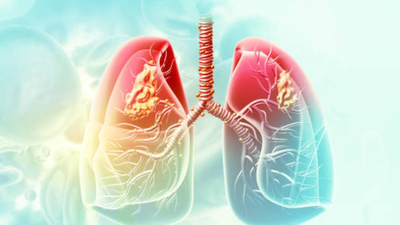
The AIIMS-Delhi is studying links between exposure to air pollution, particularly fine particulate matter 2.5, and the risk of developing lung cancer. The AIRCARE study, which the institution claimed is the first of its kind, is being led by Dr Abhishek Shankar, Assistant Professor, Radiation Oncology, AIIMS. Dr Shankar said that as air pollution continues to be an increasingly significant public health concern, there is a need for research to inform policy and disease management. He said India is home to some of the most polluted cities in the world, and there is an urgent need to scientifically look at the effects of pollution on people’s health. “Lung cancer is one of the most common cancers among males in India, and there is a high number of non-smoking lung cancers among females and young adults,” Dr Shankar stated. Air pollution has emerged as a contributing factor to lung cancer, but more evidence is needed on this issue from India, he said. “It is deeply concerning that lung cancer, once assumed to be a disease mostly associated with people who smoke tobacco, is now seeing a rapid increase in incidence amongst people who do not smoke,” Dr Shankar said. The AIRCARE study will study 1,615 lung cancer cases with 1,615 controls from family members across the Delhi-NCR. The study is a complex undertaking involving both clinical and non-clinical components, Dr Shankar said. One aspect of the study will be to employ both a cohort and case-control design to track the effects of chronic PM 2.5 exposure on lung cancer across demographics and socio-economic groups, he said. Another aspect of the study is to search for a unique genetic signature in the Indian population being exposed to air pollution. Simply put, the study will attempt to isolate an Indian population-specific genetic imprint to see whether a particular early genetic event in response to air pollution exposure develops into lung cancer later in life, Dr Shankar said. With the data, the researchers will develop a risk-based screening model based on both clinical and molecular components specific to the Indian population and exposure levels. It will also identify the susceptible population among the cohort who are more at risk of developing lung cancer, he said. “Lung cancer continues to be the second most frequent cancer in males in India and the fourth most common type for both sexes. There is an urgent need to implement policy and management strategies to tackle this disease and mitigate further loss of life,” Dr Shankar said.




 हिन्दी
  English