 Sipu Jha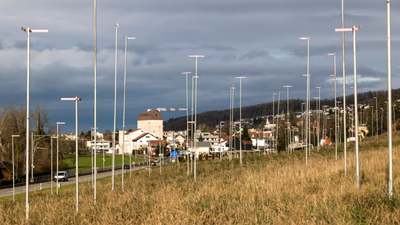
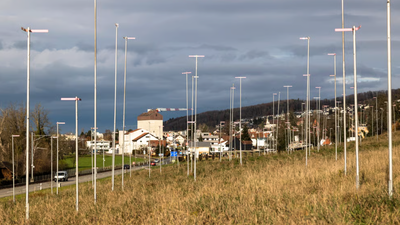
In Switzerland, construction does not begin with concrete or cranes, but with something far more unusual. Empty frameworks trace the future. Weeks before a building is approved, tall poles rise from the ground, connected by thin lines that map out walls, roofs, and balconies in mid-air. Known as Bauprofile, these full-scale outlines transform architectural drawings into physical reality. They allow anyone walking past to see, judge, and even challenge a building before it exists, turning urban planning into a visible and participatory process rather than a purely bureaucratic one.
How tall poles map homes before construction in Switzerland
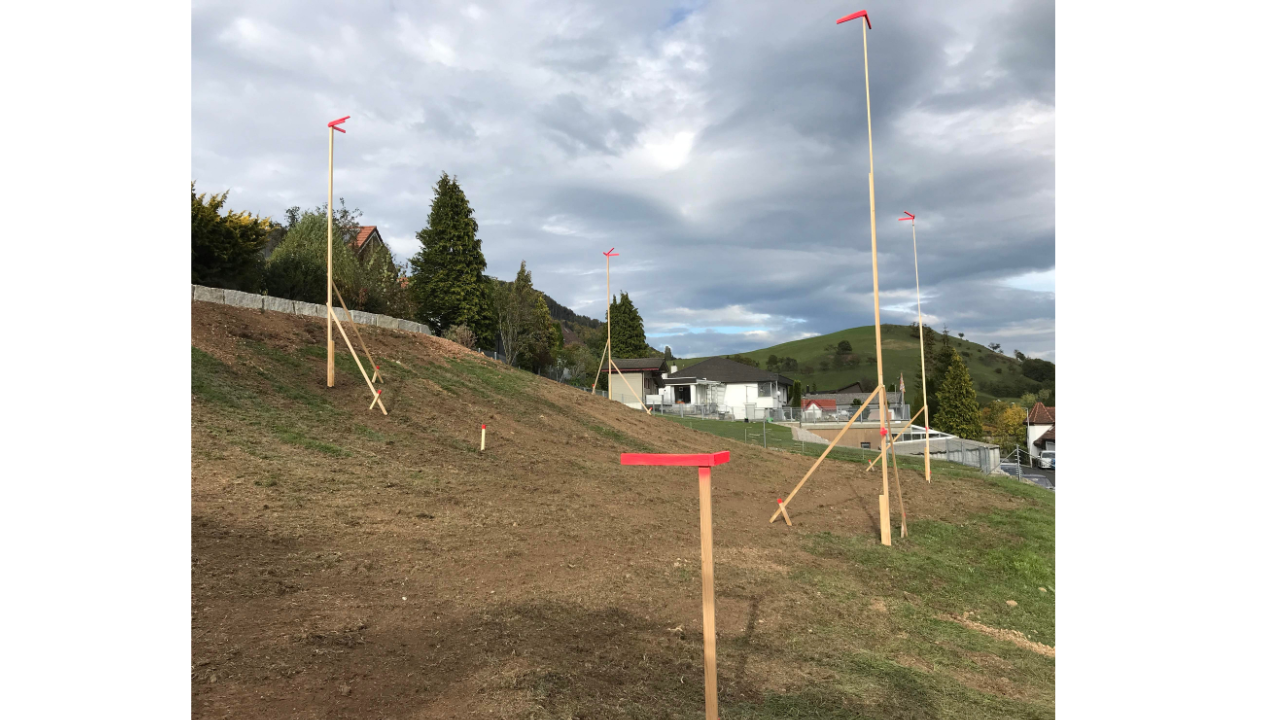
The creation of Bauprofile is both simple and precise. Surveyors begin by translating architectural plans into exact ground coordinates, marking the footprint of the structure. From there, tall poles, often several metres high, are installed at critical points such as corners, roof ridges, and façade edges.These poles are then connected using strings, wires, or wooden slats to define the building’s outer geometry. In some cases, additional markers indicate balconies, terraces, or sloping roofs, giving a surprisingly accurate sense of volume. While the structure lacks mass, it conveys proportion with striking clarity. Standing beside it, one can gauge not just measurements, but presence, how the building will feel within the space it occupies.Bauprofile are not aesthetic choices. They are embedded within Switzerland’s planning framework. Once a construction proposal is submitted, authorities require that its physical outline be displayed during the official notification period, which typically lasts two to three weeks depending on the canton.This period is crucial. It is when neighbours and local stakeholders can examine the proposal in real-world conditions and raise objections if necessary. Concerns may range from blocked sunlight and altered sightlines to broader issues of neighbourhood character. By making the proposal visible at full scale, the system ensures that objections are informed by lived experience rather than abstract interpretation.
Why drawings and renders are not enough
Architectural plans, however detailed, demand a level of spatial imagination that most people do not possess. Even advanced 3D renders can mislead, often presenting idealised perspectives that fail to capture real-world impact.Bauprofile address this gap by placing the building directly into its environment, albeit as a skeletal form. Shadows can be observed, sightlines tested, and scale understood instantly. What might seem acceptable on paper can feel overwhelming when physically outlined, and vice versa. This immediacy reduces misunderstandings and prevents disputes from escalating after construction begins.
A system that redistributes power
One of the most significant aspects of Bauprofile is how they shift influence within the planning process. Instead of decisions being confined to architects, developers, and regulatory bodies, ordinary residents are given a tangible basis for participation.This does not mean every objection halts a project, but it does ensure that concerns are harder to ignore. Developers, aware that their plans will be publicly scrutinised in physical form, are often incentivised to design more sensitively from the outset. In this way, Bauprofile act as both a preview and a form of accountability.
Could invisible buildings work beyond Switzerland?
The idea behind Bauprofile is universally relevant, making future developments understandable before they are built. In cities grappling with disputes over space, skyline, and environmental impact, such a system could enhance transparency and trust.However, its success depends on more than just implementation. It requires legal frameworks that allow for meaningful public objection, as well as a willingness among developers and authorities to accommodate that process. Without these conditions, the poles would become symbolic rather than functional.
Seeing the future before it arrives
Switzerland’s “invisible buildings” demonstrate a simple but powerful principle. People make better decisions when they can see the consequences clearly. By turning plans into physical outlines, Bauprofile bridge the gap between imagination and reality.In an era dominated by digital visualisation, this analogue method feels almost counterintuitive. Yet its effectiveness lies precisely in its simplicity. Before anything is built, the future is briefly made visible, giving communities a rare chance to engage with what is coming, rather than reacting to what has already been done.






 हिन्दी
  English