 Sipu Jha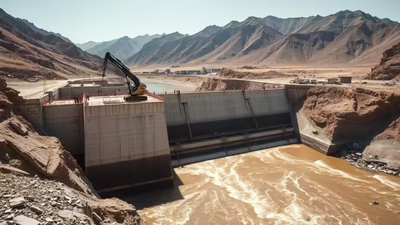
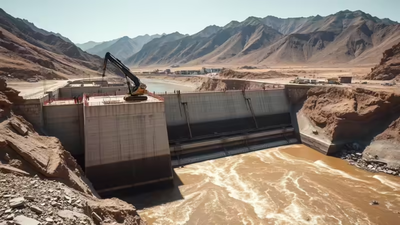
Pakistan, heavily dependent on the waters of the Indus basin, faces a acute risk of insufficient water storage after India suspended the Indus Waters Treaty (IWT) earlier this year, according to the Ecological Threat Report 2025.The report, released by the Institute for Economics and Peace, a Sydney-based independent and non-profit think tank, says the suspension gives India the ability to control the westward flow of the Indus and its tributaries into Pakistan. The move came after India decided to put the treaty in abeyance as a punitive measure following the Pakistan-sponsored Pahalgam terror attack on April 22 this year.This marks a major setback for Pakistan, whose agriculture depends 80 per cent on the Indus River system. The report highlighted that Pakistan’s dams can currently hold only about 30 days of Indus flow, leaving the country highly vulnerable to disruptions.“Pakistan lacks sufficient storage to buffer variations,” the report warned, adding, “If India were truly to cut off or significantly reduce Indus flows, Pakistan’s densely populated plains would face severe water shortages, especially in winter and dry seasons. Indeed, about 80 per cent of Pakistan’s irrigated agriculture depends on Indus basin rivers.”While India’s infrastructure limits its ability to completely stop river flows, even small disruptions could have “disastrous” short-term effects on Pakistan’s farm sector.In May, India carried out “reservoir flushing” operations at the Salal and Baglihar dams on the Chenab River without notifying Pakistan. This process, used to remove silt by draining reservoirs, had been restricted under the treaty due to the risk of sudden downstream changes.The impact was immediate: parts of the Chenab River in Pakistan’s Punjab ran dry for several days when India shut the dam gates and later released sediment-filled torrents upon reopening them.The Indus Waters Treaty, signed in 1960 and mediated by the World Bank, has long acted as a key tool for water-sharing and conflict resolution between the two countries. It governs the use of the Indus River and its six major tributaries — five on the left bank and one on the right.








 English
  हिन्दी